Friday, May 16, 2014

Microcosm

(The Author)
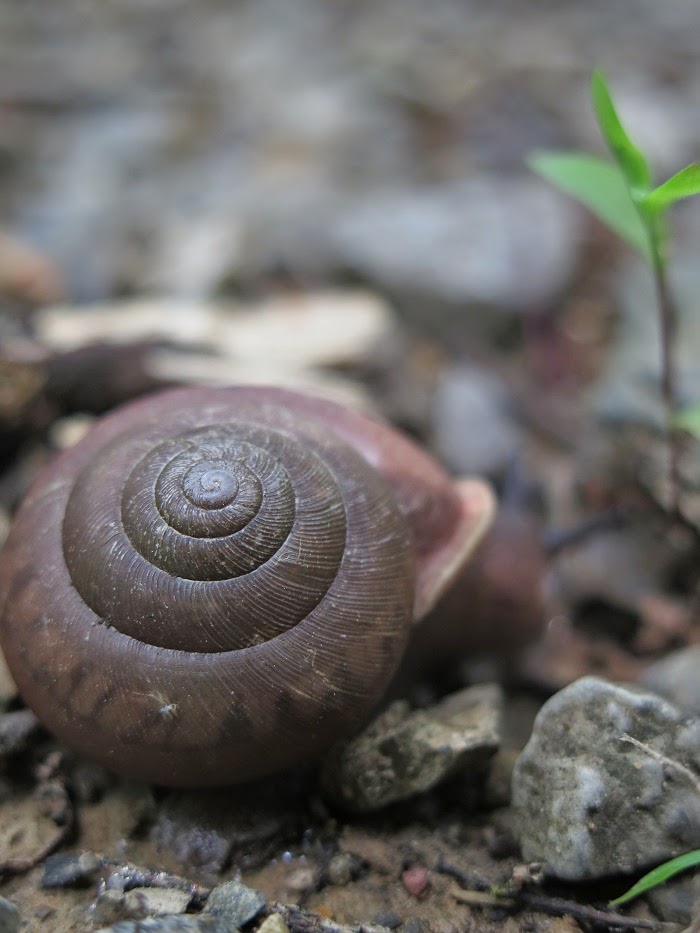
In case you haven't noticed over the course of my posts, I am fascinated by the microcosm. It is absolutely amazing what you can find if you get on your hands and knees and look at a patch of earth. There is so much going on. Sometimes it is hard to comprehend.


Hope spiders don't creep you out because I love them. And I love to get CLOSE to them....


-MG.

Tuesday, May 13, 2014

In Bloom: A Hike Up Cheoah Bald

Last Monday the entire staff of N.O.C. had their seasonal orientation at the main campus in Wesser on the Nantahala River. It was a mild affair. We took a complementary trip down the Nanty with some of the founders of the company and this was the true highlight. Most of these guys had been on these southern rivers for over 40 years. The wisdom and insight they had was deep and fantastic. I hope to spend some time in the near future getting some interviews for my "history of southern paddling" post. ( I do feel that may be a long time coming)

Following the exhaustive second day of orientation, filled with talks about policy and behavior, I decided to hike north bound on the Appalachian trail for 8.1 miles to Cheoah Bald. That was a good decision.

I hit the trail by 1:30pm and reached the summit by 6:30. It was a pitiful hike on my part. This was my first hike with any major elevation gain (3200ft of gain) in months so I couldn't be too upset with my physical ability. I spent the night on the summit at 5200' with only three other hikers and descended in the morning. Sunset was fantastic and so was sunrise. I highly recommend this summit should you ever get the chance and time while visiting North Carolina.


The best thing about the hike though was all the wild flowers. Many were in bloom and as I gained elevation what was in bloom and wasn't changed.


Of all the flowers the most spectacular, and classic, was the Flame Azaleas. In the 1700's William Bartram (whom the Bartram trail in these very mountains is named after) stated:

"The epithet fiery I annex to this most celebrated species of azalea, as being expressive of the appearance of its flowers; which are in general of the color of the finest red-lead, orange, and bright gold, as well as yellow and cream color. These various splendid colors are not only in separate plants, but frequently all the varieties and shades are seen in separate branches on the same plant; and the clusters of the blossoms cover the shrubs in such incredible profusion on the hillsides that, suddenly opening to view from dark shades, we are alarmed with apprehension of the woods being set on fire. This is certainly the most gay and brilliant flowering shrub yet known." 


I could say it no better if I tried.

-MG


Thursday, May 8, 2014

Workin' in a Copper Mine, Goin' Down, Down, Down


On Easter Sunday I received a call from the Nantahala Outdoor Center. They had accepted my application and wanted me to come and work as a river guide on the Ocoee River. I was asked to start training for May 1st. Of course, I graciously said yes. Now I have been here for a week and my river education is flowing. This post though, is not about life here on the river, the famous Whitewater Center that hosted the 1996 Olympic events or even the power of the class IV rapids that are kicking my butt. The historian in me needed to be satiated on the story of this small part of the country's past, and that is our topic of interest today. After all I did get my degree in History.

In the great story of the development of our nation one of the major overreaching themes that can be interjected in countless places is the tale of Industrialization. Communities across this country were built, advanced and doomed by the process. The area around the Ocoee River in the South East portion of Tennessee was no exception. Her industry: Copper.


Polk County, in this section of Tennessee, has been dubbed by history the "Copper Basin". The knowledge of copper, in the hills of this quite section of the Southern Appalachians, predates settlement by white westerners. The Native Americans who took these lands as their ancestral home were aware of the mineral deposits but could not fathom how rich they truly were. That wealth would only become known and exploited by American and European prospectors in the following decades. They built an industry that would effect the area for over 150 years. A period spanning the growth of American Industrialization, the Civil War, the Second World War and even into modern times.

The ability for the native Cherokee Indians to utilize the valuable resource was minor and artifacts are rare. Their use of the bits of copper was limited to that which was on the surface of the hills and washed out into the creeks and rivers in the area. It was, however, still a valuable commodity for the native peoples.


It had been falsely reported early on that gold was in the hills. The Treaty of New Echota in 1835, which ceded Cherokee lands in the southeast to the United States and their subsequent removal by means of the infamous Trail of Tears, opened the area to prospecting for westerners. As early as 1831 the first geologist of the state of Tennessee had noted the presence of "hydroxide of iron" or "gossan" near the area of modern Ducktown around Coker Creek. It was not until 1843 that the deposits containing copper and iron were fully confirmed with the discovery of the ore by a gold prospector near Potato Creek. Originally the prospector believed his find to be gold but a through examination revealed reddish crystals indicating copper. Shortly after the discovery it was believed that the area contained one of the largest deposits of copper ever found.

By 1847 a small foundry was built on Potato Creek by B.C. Duggar to extract iron. The foundry exploited only the surface ore that was of poor quality and eventually the venture failed due to high copper content. In that same year A.J. Weaver successfully produced the first shipment of copper ore from the basin. That first shipment was 31,000lbs of ore and yielded only about 25% pure copper. The ore was transported by mule carts over the mountains to Dalton GA where the nearest railroad was. The lack of a transportation network severely hurt the ability to take advantage of the resource. It was not until the 1850's that the area would truly develop a semblance of infrastructure capable of utilizing the richness of the deposit.


The 1850's saw a boom in the industry and the creation of the town of Hiwassee (modern Ducktown) along with the construction of the Copper Road connecting Cleveland TN to Hiwassee via the Ocoee River Gorge. The road was completed in 1851 and opened up new economic opportunity for the growing community. The ore was transported via mule carts along this 40 mile route. The trip took haulers two days each way and they overnighted each way at a "Halfway House". Today, along U.S. Hwy 64 there is a state historical marker commemorating the spot. The forest service still maintains part of the road as a public hiking trail for historical and recreational purposes. The wagoneers would transport goods and supplies back to the developing mining operation and towns in the area from Cleveland. At the middle of the decade over 14 companies were mining and using the road that is now Hwy 64. Around the end of the decade the companies had consolidated into three: Union Consolidated, Burra Burra, and Ducktown Copper. (Burra Burra was headquartered in good ole' New Orleans as it happens) Eventually most mining operations would merge near the end of the century to create the Tennessee Copper Company that would remain active through the 1950's.

Copper Road through Ocoee Gorge.
Of the "Copper Haulers" a man by the name of G.B. Barnes has made his mark on history. Reportedly he was the last man to use the road for transportation of copper before other means of transportation supplanted the traditional route. His claim to fame, however, was his ability to play the fiddle and give some degree of entertainment to his fellow wagoneers. In a clearly fictional story about Barnes it is reported that his mules became so familiar with is repertoire that on one occasion while bogged down in mud they noticed him removing his fiddle to pass the time. Upon noticing this the mules quickly stepped up to the challenge and promptly drew the wagon out of the muck and pushed onto Cleveland.


Like so many other places in the south the Civil War in 1861 saw drastic change for the Copper Basin. There was a halt in mining operations, which, oddly enough, were mostly owned by wealthy northern industrialists. The Confederacy regained control of the mines in 1863 and then promptly sold them off to southerners. Eventually the mines were retaken by Union forces who in turn devastated the area by destroying facilities and equipment.

Following the war production in the mines slowly resumed as the infrastructure was rebuilt, however most of the ore on the surface had been depleted. The solution was deep shaft mining. By 1877 the area was operating the only deep shaft mines east of the Mississippi. Some of these mines would reach depths of over 3,000 feet in their years of operation. Highly dangerous, deep shaft mining required drilling and explosives that exposed miners to risks much greater than surface production.


Towards the turn of the century production became limited due to lack of a rail network. It was this need that prompted the development of the famous Bald Mountain rail line (still operational to this day and open for tourism) by architect T.A. Aber. The rail line circled around the peak 1 1/2 times to overcome the 426 foot elevation difference from one rim to the other in the Hiwassee Gorge.

The later parts of the 19th century saw a major change in the industry via the production of Sulfuric Acid. As the ore was smelt it released sulfuric acid into the atmosphere and consequently created acid rain.  From the 1890's and into the 1900's a number of major injunctions were filed against the mining companies by local land owners for the devastation. Eventually a solution was devised to collect the sulfuric acid to make fertilizer and products for sale that furthered new industry. By the 1920's methods of extraction via "flotation plants" had devised means to facilitate other products such as zinc, sulfur dioxide, and iron sulfate creating even greater markets.


The story of the Copper Basin the middle to late 20th century saw a change in concern for the environment. In terms of ecological impact, the smelting of the ore required huge quantities of wood to fuel the furnaces. The wood came from the forests in the neighboring hills. The closer to the mines the better. In time the areas surrounding the mines were denuded and removed of their vegetation creating a "moonscape" appearance The area had been devastated by the removal of local flora and the chemicals that had run off into the local waterways began to prove toxic. In the new deal era the C.C.C planted trees in the area in an attempt to reforest the landscape and a clean up of water sources. The years between 1920 and 1950 thousands of acres of land were revitalized with pine and local species of trees.

Deforested area around the mines. HWY64 runs the right side of the photo.
Area reforested today. You can see the pit mine and Gossan ruts still visible.
The area saw a complete cease in iron production in the 1980's but the industry of the area was still very active. The chemical plants that had once harvested the byproducts of the smelting process began to import raw materials from other parts of the country and continued to produce numerous chemical compounds for national and international markets.

Today chemical production continues in the area but a major part of the economy has been replaced by tourism through the numerous companies operating outdoor adventure activities around the Ocoee River. With the creation of the Ocoee dam system consistent water is available for the Ocoee river. Through this the Ocoee river, which was once a dead ecosystem due to the mining operations in its watershed, has become a premiere destination for whitewater enthusiasts. In peak season over 8,000 visitors a day will raft the river. The economic impact of this industry has begun to change the character of the area and for most visitors the effects of mining are distant, only to be noted if one seeks it out.

A special thanks to the Ducktown Basin Museum for providing the resources needed to complete this essay.

If you enjoyed my brief history of the area I am already researching two more similar essays. One essay detailing the development of the three dams on the Ocoee River and the role of the Tennessee Valley Authority (TVA). The third essay, and the one proving to be the hardest to gather sources, on the history and development of whitewater paddling in the Southeast.

-MG


Friday, May 2, 2014

Fate of a Moth


I witnessed a tragedy the other day.

As I left my Jeep to run a quick errand I stumbled upon a magnificent specimen of a Ceropia Moth in the parking spot next to me. Quickly, my camera was grabbed.

Sadly, immediately after I shot my pictures, (and decision to not interfere with it I.E.: relocate to a safe position) this glorious creation of nature was destroyed by another vehicle. Unaware of the creature in his parking space, he crushed her.

Fate of a Moth

Your beauty
Grace exuded through color
became futility
What another did made me pallor

Such majesty
as you opened your wings
revealing pageantry
common folk cares not for such things

Man's behemoth
puttering beetle of a machine
unknowingly extinguished
The hope of a dream.

-MG


Wednesday, April 23, 2014

Happy Anniversary Escapade!

One year ago I finally acquired my own canoe. It was one of the best things that ever happened. This is to you Escapade, thanks for a great year!


Rio Grande Del Norte from mumblefords on Vimeo.


-MG

Tuesday, April 22, 2014

Genesis: An Essay on Freedom

There are times in my life where I am in awe of the accomplishments of man. It strikes a chord with me sometimes...

...sometimes.

A failure of logic seems to be universally accepted in modern civilizations: In order for us to provide what we need, for our own being, we must exchange our time, goods, or services to provide something others need. It is a circular failure. So much energy is wasted. We help others live comfortably so that we may gain some reward of money or goods, so that we may live comfortably.Why have we not circumvented this and simply provided for ourselves?

The answer is simple: The goods and services we rely on for comfort are incapable of being reproduced by an individual.

Consider an example easily identified with modern life: the automobile. Many of us in a modern civilization are reliant on this machine but it is a complex relationship; well beyond the ability of any individual to produce or fully maintain. Even if you are a skilled mechanic, someone or some machine built the engine block you just put in, or the crane that helped you lift it, and even designed the machine that built the engine block. That same mechanic can not reproduce the microchip that controls tire pressure sensors or could have mined the copper ore, smelted it and turned it into the electronic connections, much less have harvested the raw rubber materials, processed them and finally manufactured it into an insulation for that copper. An individual can not do everything in our complex world of technology and specialization.

It is possible we take the use of the automobile as increasing our quality of life and giving us greater range of expression. Is this not true? With the use of the automobile you can travel far and wide while increasing the number of things you have experienced. Mountains, far from my home, can be visited or the great cities built by the hands of generations of men. But at what expense?

In the perspective that has been laid out, specialization and advanced technology may add to our perceived quality of life but could also simultaneously remove our individual freedom.

We are not free if we rely on things that are beyond our individual capacity. It could be that true, intrinsic, freedom may come only when the tools we use to better our existence are within our individual capacity to recreate them. The automobile will only serve us well as long as we need no others to maintain it. When it fails, we see our quality of life diminished and our expression limited. We need someone to help return us to our desired way of life.

To use specialized technology is to sacrifice our freedom for an illusion of expanding it. It is an enslaving agent. 

In an example of basic technology recall the gift of Prometheus.  If you were a paleolithic man, raised in a world where fire was used to prepare meals, fend off animals and sustain warmth, and you did not command the ability to make fire, you would be reliant on your fellow man for sustenance and protection. However, as one who knew how to make fire you, alone, could travel as far and wide as your feet and skills took you, all the while having the freedom to use fire. It is a possessed skill, a possessed knowledge, capable of being reproduced regardless of who is in your company or social reach. In that there is total freedom.

Freedom is expressed when you need not the technology but only the capacity to recreate it. 

The man who becomes reliant on the ax for his quality of life, and can not recreate it, should it fail, is enslaved to the ax. He may perish under the prison he created, unless a solution is found within his capacity. The man who makes a new ax from materials he collects has command of the tool, and freedom of the skill. 

What can we make of all of this? The most basic way I can convey it is: as we have become more and more reliant on technology and others to maintain our perceived quality of life, we are limiting our freedom by becoming enslaved to the technology and our fellow man. If we want full freedom we have to live in a world that is capable of being reproduced by an individual and not a society of men. 

When my mind follows the line of thought I have outlined above I begin to think about Genesis. The book in the bible. In the western world these are ancient stories. I do not approach them from some religious significance but from an understanding of a deep moral problem that was understood fully and wholly by our ancient ancestors. 

The first story we encounter in Genesis is that of the Garden of Eden. This is a story with roots over 6,000 years ago. In this story man has everything he needs. Fully sustained and satiated by nature,man  provides for nature and nature provides for man. It is interrupted however by the original sin, the first and most grave of sins: The desire for more. It is not enough that man possessed the capacity to do what was desired and live as they wished to live. What was wanted was the ability to control the earth like a god. Virgin mankind wanted what was beyond the individual human capacity. Once the goal is reached for, God punishes, and the bounty of nature is removed; men become enslaved to the land, to each other. 

Cain and Abel follow the fall and provide another story capable of interpretation in the same vein. In giving a sacrifice to God, Cain is rejected in his capacity to create crops while his brother, Abel, provides a sacrifice he sought through his hand in the wild. Abel's sacrifice is accepted however. A conflict of agriculture vs. hunting/gathering for ones needs? Agriculture is the key development that led to civilization. Civilization leads to specialization of skills and, consequently, a way of life an individual can not solely sustain. Could this be the great sin against God here?

Population increases as agriculture takes hold and men rely on other men. Sin becomes rampant and we encounter the third mythical story of Genesis: The Great Flood. This story is told and retold by a number of peoples and cultures but in our western tradition it has a specific, poignant, purpose. The flood is a device used to return us to the beginning. To start anew. Might it not be an attempt to return us back to a world within the capacity of the individual? If so, it fails.

We are then led to the great Tower of Babel. Specialization returns and the great cities of men arise. No one man is capable of the great works they desire and we all begin to work together to a goal. The consequence of such great works comes in the form of us failing to be able to communicate. As the men in the story build this great structure they are plagued with varied tongues. Unable to communicate they are forced to live the life of an individual. A minor return to the beginning?

When I consider these stories I would like to see the ancients telling us of the greatest tragedy of man. The sacrifice of the individual freedom. What they really mean, I can never fully know but, there is the possibility this is the sin God punishes us for: We have sacrificed ourselves to raise the collective whole and worthy few.

To become reliant on others and the greater works of man could be the highest of sins because it denies us of our self and true, personal, freedom.

It is a hard one to swallow considering the world we were born into. A challenging feat of character or necessity would need to be undertaken to escape from modern society. The attitude to reliance on others, a desire for that which is beyond our capacity, has enslaved generations past and the generations to come.In that point lies the nature of why it may be the great, original, fault of man. It has become a perpetual state. A perennial condition of mankind.

After an effort to make the precluding arguments, I must consider a counter line of thought. I assume freedom is a high good. That it is a state to be desired and sought after. However, under the definition above, it is an incredibly elusive state in our modern world. Now, I ask, "Is freedom even  in human nature?"

Human beings, Homo Sapien-sapiens, have tirelessly been considered social creatures for countless generations. A fantastic case can be observed in other social creatures, a pack of wolves, a pride of lions, or a herd of buffalo. These are noble creatures. There existence, though, is dependent on each other. It is the nature of their being. Are humans so different? We are not the albatross that needs no companionship beyond a mate to sustain. Nor are we like a polar bear wandering alone among the ice. We are naturally reliant on one another. It is a world we are literally birthed into. We suckle at the mothers breast for the first years of our life while other, more solitary, creatures can sustain within minutes, hours, days or weeks. 

Take it as you wish but maybe freedom was a concept never meant for mankind. Maybe it is a product of our psyche as we have desired to exist beyond what we have been granted. The idea of absolute individual freedom might be the forbidden fruit we were never to touch.  Or maybe a state of freedom is the greatest state of bliss. That is to live in a world made by your hand, sustained by your hand and capable of being reproduced independently by your hand, is the most elusive, and highest of goods.

-MG

Saturday, April 19, 2014

Saturday Night Movie: Deep North

Brooks Range? Photography? Expedition?

This is a fine short film that shows alpinism as art.

 
Nikon - Deep North from Corey Rich on Vimeo.